Last Updated on May 18, 2026 by David
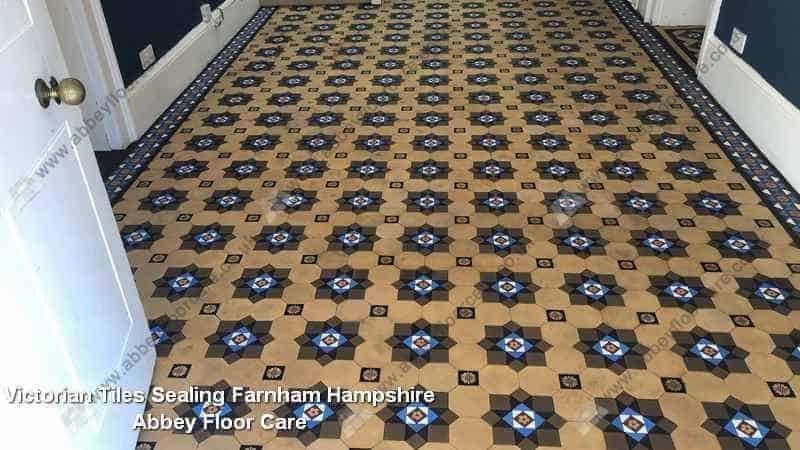
The task of restoring floor tiles while maintaining the beauty of intricate designs was crucial during this Farnham project. Over time, the hallway tiles accumulated a significant build-up of old residues, stains, and deteriorating coatings that standard mopping could not effectively tackle. This neglect led to a considerable loss of colour contrast and vibrancy.
This detailed case study outlines the entire restoration process, from the initial inspection to the safe cleaning methods, drying phases, and protective sealing techniques implemented.
Understanding the Causes of Darkening in the Victorian Clay Tile Floor of Farnham
Evaluating the Initial Condition of the Floor Tiles
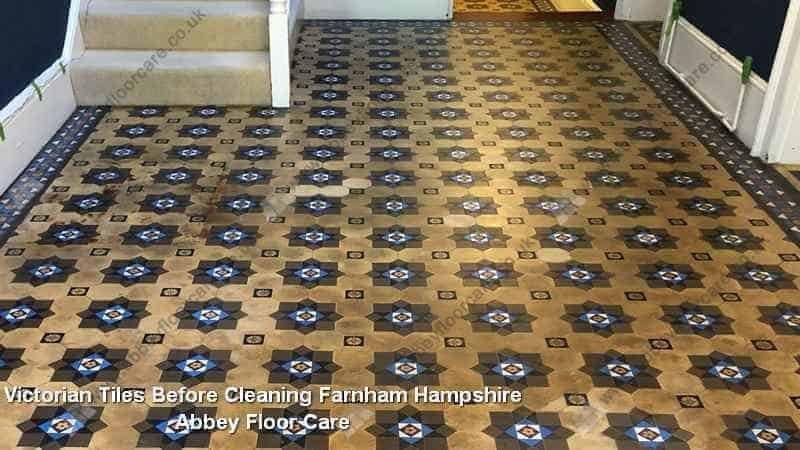
If your Victorian tile appears darker following each cleaning, it is likely that old residue is trapped beneath the surface rather than simply lying on top. The Farnham hallway serves as a prime example of this issue, with noticeable wear patterns evident in high-traffic areas, edges, grout lines, and depressions where softened coatings and dirty cleaning solutions had built up over the years.
This Victorian clay tile floor is located in a busy entrance hallway. Daily foot traffic brought in grit, damp soil, warm water, and various cleaning products onto the unglazed clay surface. Several factors contributed to the floor’s inadequate response after each cleaning attempt, including trapped soiling, surface dirt, cleaning product penetration, rinse-off failures, and the porous nature of the tiles. My experience suggests that once contamination settles into the pores of the tiles, standard mopping tends to redistribute the dirt rather than effectively removing it.
Farnham is renowned for its array of Victorian and Edwardian terraced houses, quaint cottages, and larger detached residences, as well as more modern suburban properties erected in the latter part of the twentieth century, particularly around the historic town centre. Victorian tile floors are frequently found in entrance hallways, front paths, porches, utility rooms, and even kitchen walkways within these older homes, especially where original decorative flooring has been preserved beneath contemporary coverings. Farnham lies within the Borough of Waverley in Surrey, close to the Hampshire border, primarily within the GU9 and GU10 postcode areas.
Ordinary dirt can generally be removed effectively with a soft mop, warm water, mild detergent, and a clean cloth when applied correctly. Residue trapped within the clay behaves differently. Waxes, old products, softened coatings, grime, and prior treatments can entrap contamination within the surface pores, resulting in a hallway that appears dull even after thorough cleaning efforts.
Diagnosing Problems Impacting the Condition of the Floor
The build-up of residue significantly altered the floor’s response to subsequent cleaning attempts. Old sealers, waxes, acrylic coatings, remnants of previous treatments, a layer of soiling, stripper residue, and contamination in the grout lines created a dulling barrier that routine cleaning could only shift around, rather than eliminate entirely.
Historic staining also created challenges in isolated areas, where rust marks and past moisture exposure had impacted the unglazed surface. Addressing rust stains required a pH-neutral rust remover, thorough testing of affected regions, controlled application time, a non-metallic brush, stain removal through small area testing, and rigorous rinsing to prevent over-treatment of the unglazed tiles.
Failures in topical coatings were apparent where an old barrier had deteriorated, leaving it patchy, dirty, stained, and trapped beneath subsequent cleaning efforts. A failed surface coating can peel, retain moisture, attract dirt, and necessitate a strip-back before any re-sealing decisions can be made. This is why the initial focus was on cleaning evidence rather than simply opting for cosmetic finishes.
The floor in Farnham displayed the same lacklustre appearance post-cleaning as noted in the Derby Victorian tile cleaning case study. This comparison is essential, as both hallways remained soiled following routine washing, with improvements only realised through the extraction of softened residue instead of its mere redistribution.
Understanding the Limitations of Home Cleaning Methods for Victorian Tiles
Home cleaning methods, especially mopping, proved inadequate because the dirty solution was never fully extracted from the pores of the tiles. The surface would become wet, the residue softened, and the mop would inadvertently spread diluted contamination across the original tile pattern, resulting in uneven patches once the water dried.
Steam cleaners were deliberately avoided due to the risk of heat damage. These devices use high heat and moisture to push water through the grout and into unsealed tiles. This can lead to the movement of stains, cracking in vulnerable areas, promote efflorescence in tiles, and leave unwanted damp marks on a floor already burdened with historic residues.
The risk of bleach discolouration was another serious concern, as bleach and harsh chemicals can discolour pigments, damage historic grout, and leave uneven patches across the tile surface. This irreversible damage is why the chosen cleaning method avoided bleach, vinegar, abrasive powders, rubber pads, and aggressive scrubbing, particularly in areas where intricate details had already lost their clarity and definition.
Victorian encaustic and geometric tiles are clay-fired at high temperatures, which provides their fired surface with chemical stability but makes them physically sensitive to abrasion and unsuitable for acidic cleaning solutions. This crucial consideration guided the entire project, as the cleaning process aimed to extract contamination from the surface pores without scratching, dulling, or compromising the original pattern detail.
Effective cleaning should focus on removing residue rather than abrading the original clay surface.
Understanding the Need for Controlled Cleaning Techniques
Controlled cleaning techniques were selected to ensure the removal of residual contamination without resorting to grinding, resurfacing, or aggressive stripping methods. A patch test conducted in a small area confirmed the cleaning method, product compatibility, initial application response, surface safety, and the ability of the historic tiles to be cleaned without causing unnecessary damage to the tile face.
Moisture control was critical, especially as older hallways often lack a modern damp proof membrane beneath the tiles. Excess moisture during cleaning can loosen the bedding, slow the drying process, activate salts, and leave unsightly white marks as moisture evaporates. The cleaning process relied on controlled dwell time, agitation, wet vacuum extraction, and rinse control rather than flooding the floor.
Patch testing also revealed that much of the darkening was, in fact, removable residue rather than a permanent loss of colour. This information was vital for the homeowner, as it indicated that considerable improvement could be achieved following intervention. We often find that these floors can appear dramatically enhanced once old coatings and ingrained dirt are effectively removed.
The preparation stage involved identifying areas where old cleaning water, grit, and softened coatings had accumulated most heavily. Similar residue behaviour is noted in the Windsor hallway residue case study, where multiple cleaning passes were necessary before the dull finish ceased to return.
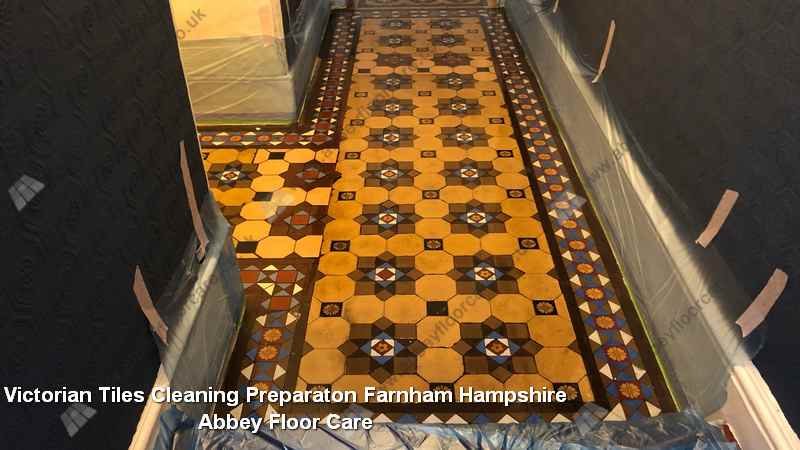
The preparation confirmed that achieving a safe outcome relied on the correct chemistry, timing, and extraction methods, rather than solely on pressure. Surface residue was softened, lifted, and removed as slurry, preserving the original colour and fired matte character instead of imposing a false gloss over contamination.
Uncovering the Reasons Behind Old Stains and Residues Concealing the Original Hallway Pattern
Historic staining and failed surface residues frequently obscure the original pattern long before any actual damage occurs to the floor. In Farnham, the dull areas were compared with a cleaned test area to distinguish between removable grime and older marks that had penetrated deeper into the unglazed clay.
Removable residue presented as a coating issue, where old sealers, waxes, and dirty cleaning solutions accumulated on the surface. Once the test clean penetrated that layer, the original colour contrast and geometric pattern became strikingly visible and revitalised.
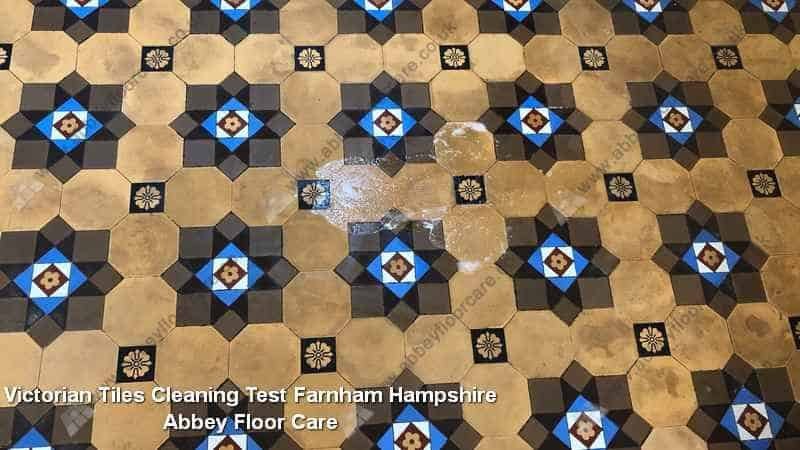
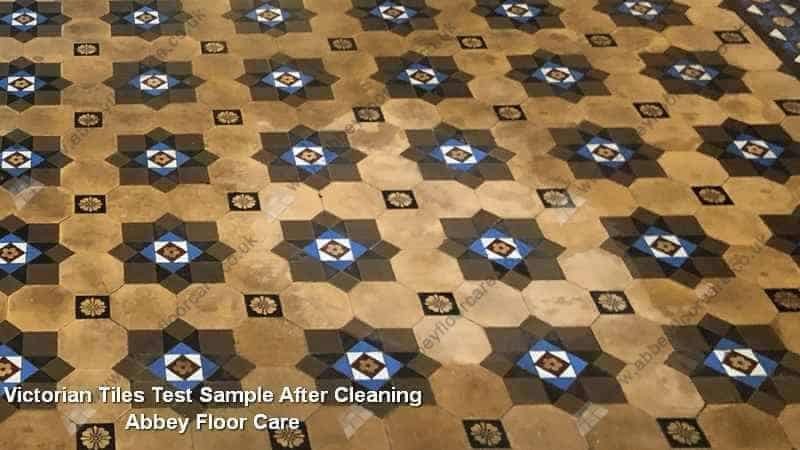
Older staining exhibited different characteristics, with rust marks, leak stains, and long-term soil potentially migrating into the tile body itself. The cleaned sample established realistic expectations by indicating which marks would soften, which areas would regain clarity, and which deeper stains would require careful reduction rather than aggressive treatment.
How Controlled Victorian Tile Cleaning Effectively Removed Deep Residue Without Damaging the Surface
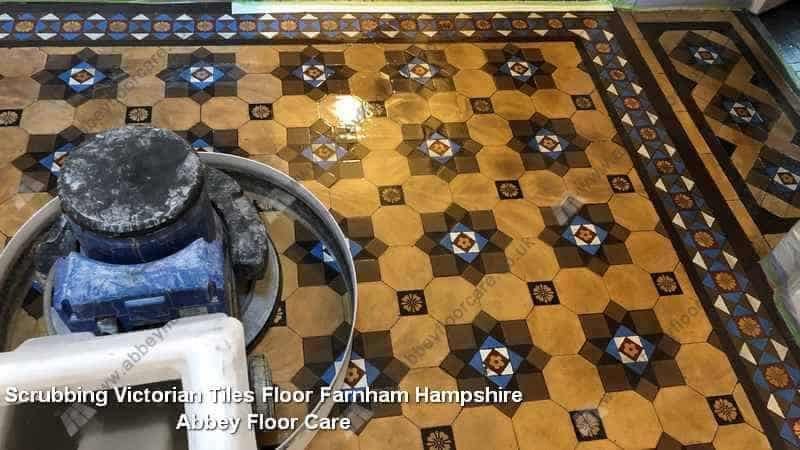
Repeated scrubbing can irreparably damage an old Victorian clay tile floor long before effectively removing deep residue. The cleaning process undertaken in Farnham employed a patch test, controlled dwell time, low-abrasion agitation, wet vacuum extraction, and rinse control to ensure that softened grime was extracted before it could dry back into the pores.
Controlled alkaline cleaning proved effective as the product was given ample time to loosen waxes, grime, and softened residue prior to agitation. The dirty solution, slurry, rinse water, and loosened soiling were subsequently extracted with a wet vacuum to ensure that the cleaning process did not leave excess water lingering within the old hallway.
Controlled cleaning effectively lifts contamination without grinding away the historic clay.
The low-abrasion cleaning method protected the original surface, as the process intentionally avoided abrasive pads, wire wool, vinegar, bleach, and acidic cleaners. This principle of low-water extraction is also illustrated in the Blyth Victorian tiles cleaning case study, where meticulous slurry removal enhanced colour without creating an artificial surface sheen.
Why the Farnham Hallway Became Noticeably Clearer After Professional Cleaning
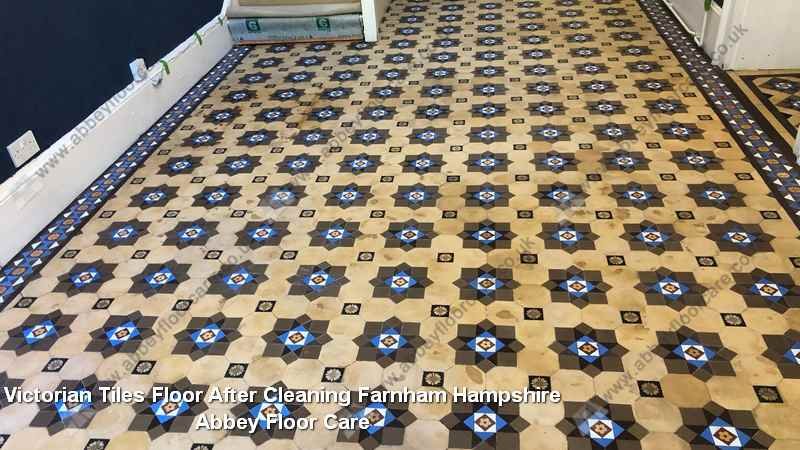
If your floor appears cloudy even after cleaning, the results from Farnham demonstrate the transformative effect of removing the contamination layer from the surface pores. The hallway regained a more vibrant colour balance, sharper border definition, and a significantly clearer original pattern once the old dulling film was eradicated, revealing the clay beneath.
A breathable protective coating was applied only after the floor had thoroughly dried, enabling sealing. This impregnating sealer facilitated moisture evaporation, ensured that the finish remained fully breathable, managed water vapour, enhanced stain resistance, reduced surface moisture issues, and allowed the old tiles to remain cleaner without forming a heavy topical coating.
A restored Victorian tile floor showcases the original fired matte surface with consistent colour and pattern, while a topically sealed surface — when appropriate — provides a subtle protective sheen without compromising the period character. A professionally restored and correctly sealed floor is significantly easier to clean and maintain compared to a worn or improperly treated surface.
Accessing Resources for In-Depth Knowledge on Victorian Tile Cleaning Without Aggressive Stripping Techniques
Aggressive stripping methods often pose more risks than controlled Victorian tile cleaning for old patterned hallways. The Farnham project is part of a collection of cleaning-led case studies where failed coating layers, old residue, and clay sensitive to moisture required meticulous extraction prior to any protective finish being applied.
Proper ongoing maintenance is vital for preserving this type of floor. This includes removing grit before wet mopping and ensuring that cleaning methods remain gentle enough to prevent premature breakdown of the sealer. Stronger products should be avoided, as they can strip protection, discolour grout, and complicate surface management. Comprehensive safe cleaning guidance is available in the Victorian tile cleaning hub, tailored for homeowners assessing similar floors.
The water absorption test serves as an invaluable diagnostic tool, as water droplets that absorb quickly indicate reduced beading and weaker protection. Proper ongoing maintenance — including pH-neutral cleaning, grit removal before wet mopping, and resealing at the appropriate intervals — is essential for prolonging the floor’s lifespan.
Related examples, such as the Tutbury Minton cleaning case study, illustrate how dull patterned floors can reclaim their colour when old residue is diligently removed. These projects reinforce the same principle observed in Farnham: breathable sealing protects cleaned pores, but the real transformation begins with controlled cleaning and thorough extraction.

David Allen — Abbey Floor Care
David Allen of Abbey Floor Care boasts over 30 years of hands-on experience in cleaning and protecting Victorian tiled floors across the UK. This Farnham case study illustrates how dark residue, historic staining, and failed surface coatings were rectified on a period hallway without compromising the original pattern.
The article Victorian Tile Floors That Stay Dirty After Cleaning was first found on https://www.abbeyfloorcare.co.uk
The Article Victorian Tile Floors: Why They Remain Dirty After Cleaning appeared first on https://fabritec.org
The Article Victorian Tile Floors: Reasons They Stay Dirty Post-Cleaning Was Found On https://limitsofstrategy.com
The Article Victorian Tile Floors: Why They Remain Dirty After Cleaning found first on https://electroquench.com